
Beneath the familiar continents of Azeroth lie echoes of forgotten empires—kingdoms once mighty, now scattered in myth. From the naval prowess of Kul Tiras to the ancient pride of Zandalar, these lost civilizations shaped the politics, magic, and spirit of the modern world. Their ruins whisper of triumph and tragedy, offering insight into the cycles of rise and fall that define Warcraft’s history.
This article journeys through the lost and rediscovered kingdoms of Azeroth—how they endured, how they fell, and what their stories still reveal about the living world today.
Kul Tiras: The Maritime Power
Once a beacon of naval supremacy, Kul Tiras stood apart from both Alliance and Horde, governed by loyalty to sea and storm. Founded by Daelin Proudmoore, the island kingdom thrived through trade, shipbuilding, and exploration. Its harbors became crossroads of culture and commerce—until isolation fractured its unity. The aftermath of Daelin’s death left Kul Tiras adrift, haunted by guilt and resentment until Jaina’s return reconnected its fate with Azeroth’s destiny.

Kul Tiras reminds players that power without perspective is a ship without a rudder.
Zandalar: The Cradle of Empire
Long before humans or elves rose to power, the Zandalari Empire ruled unchallenged. It was the first civilization to bind faith and politics through its Loa gods, its might reflected in towering pyramids and endless jungles. When players finally set foot in Zuldazar during Battle for Azeroth, they didn’t just explore a city—they walked through history. The Zandalari’s resilience, however, came with hubris. Their pride invited ruin, proving that even gods cannot anchor an empire against time.
Zandalar stands as both monument and mirror—a reflection of glory’s price.
Vulpera and the Nomads of Vol’dun
In the harsh deserts of Vol’dun, a different kind of civilization survived—not through conquest, but through cunning. The Vulpera, resourceful scavengers turned traders, embody the resilience of Azeroth’s overlooked peoples. Their rise from obscurity shows how survival itself can be a form of empire. While the world’s titans clashed for dominion, the Vulpera endured through adaptability—a quiet defiance against extinction.
Even the smallest caravan carries the legacy of the lost.
- Kul Tiras: Human naval kingdom of trade and tradition.
- Zandalar: Ancient troll empire tied to divine Loa worship.
- Vol’dun: Desert of nomads and survivors, a study in endurance.
- Nazjatar: The drowned empire of Queen Azshara, reclaimed by the sea.
- Uldir: A titan facility gone rogue—civilization turned containment.
The Echoes Beneath the Waves
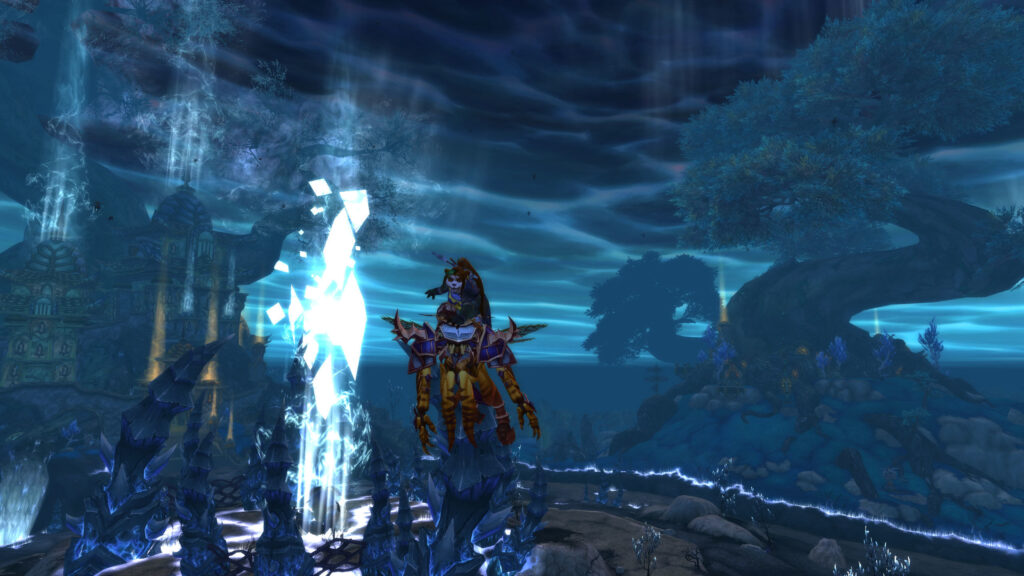
Not all lost kingdoms are visible. Beneath the seas, the Naga build cities of coral and malice, remnants of Azshara’s ancient Kaldorei empire. These underwater ruins are more than architecture—they are the consequence of arrogance. Each shimmering hall of Nazjatar tells a story of brilliance corrupted by obsession. What was once beauty now thrives on decay, proving that no civilization, however magnificent, can escape its own pride.
The ocean remembers everything the surface forgets.
Beyond the Known World
Every expansion uncovers another fragment of lost history. The Dragon Isles rekindled ancient oaths of guardianship, while the War Within hints at civilizations buried deep within Azeroth’s crust. From Titanforged halls to forgotten dwarven strongholds, the world’s geography continues to reveal how interconnected its past truly is. The deeper players go, the more they find that history is less about loss—and more about rebirth.
In Azeroth, the past is never gone—it’s simply waiting to be rediscovered.
The Legacy of Forgotten Empires
Every lost kingdom left something behind—architecture, technology, or ideology. Kul Tiras taught the value of unity through struggle. Zandalar embodied the danger of divine pride. The Vulpera and others showed the quiet strength of adaptation. Together, they form a living mosaic of resilience and failure that continues to define Azeroth’s moral landscape. The ruins we explore aren’t dead—they’re lessons carved in stone.
History doesn’t just explain the world—it shapes how players see it.
Conclusion
The lost kingdoms of Azeroth endure not through monuments, but through memory. Each rediscovery is a reminder that power fades, but legacy endures. As Blizzard continues to unearth forgotten continents and civilizations, these stories connect the present to the past, giving players a sense of belonging to something ancient and vast. The sea may swallow empires, but not their echoes.
Because in Azeroth, every ruin is a heartbeat—still echoing, still alive.
Leave a Reply